

Microplastics: the invisible health risk built into how we work and live
Tiny particles of plastic, less than 5 millimetres in size, are rapidly becoming one of the most pervasive pollutants on Earth.
Known also as microplastics (or nanoplastics where particles are less than 1 µm in size), these tiny particles can be found in our oceans, soils, drinking water, food supply, and – increasingly, within the human body (1,2,3).
Originally thought to be simply an environmental issue, microplastics are now recognised as a significant public and occupational health concern, with far-reaching implications for communities, workers, and industries worldwide (4).
What Are Microplastics?
Microplastics originate from two main sources:
Primary microplastics: manufactured microplastics, such as microbeads used historically in cosmetics or industrial abrasives
Secondary microplastics: formed when larger plastic items break down via weathering, abrasion, or degradation (5).
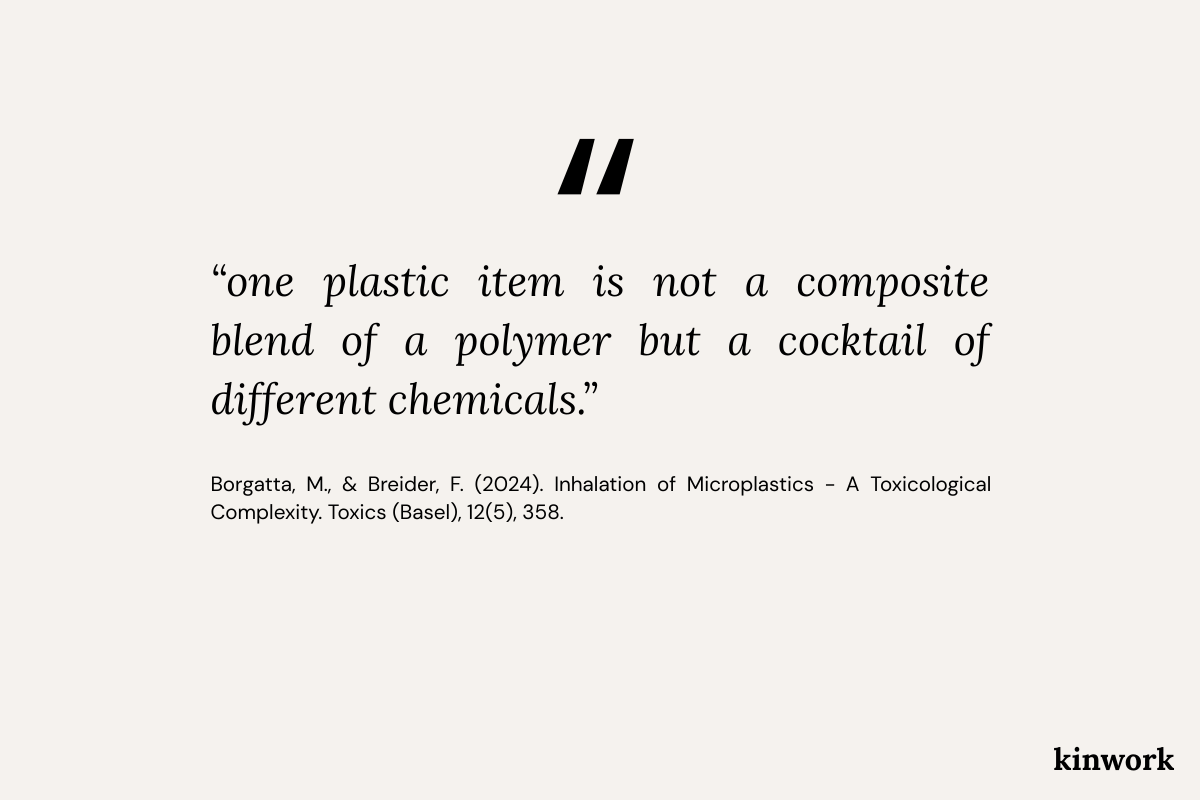
Microplastics at the outset appear to simply be pieces of inert plastic. This is not the case, however, instead they are mobile carriers, concentrating and transporting additive chemicals and adsorbed pollutants, such as plasticizers, flame retardants, antibiotics, heavy metals, microbes, and persistent organic pollutants (POPs)), creating and amplifying exposure beyond the plastic polymer itself (6, 7).
Once released, microplastics persist in the environment for centuries, moving through air, water, and soil, contaminating the plant and animal based food chain, with unknown short and long term consequences (1, 2, 3).
How Microplastics Enter the Human Body
The primary pathways of human exposure to microplastics include:
Inhalation of airborne microplastic fibres from synthetic textiles (i.e., carpets and clothing), tire wear, and urban dust (8, 9)
Ingestion of contaminated water, meat, seafood, salt, fruits, vegetables, and processed foods. In one study, those who consumed bottled water to meet their daily recommended water intake ingested 90 000 microplastics per year, versus those who consumed only tap water ingested 4 000 microplastics per annum (10). That’s a 2250% increase in exposure with potential ramifications for those who live and work in locations where they can only utilise water from plastic bottled sources.
Skin absorption, although less common, can occur if particle sizes are small enough –such as nanoplastics in cosmetic creams and products (11). Dermal exposure should be considered when applying personal toiletries and cosmetics, as well as in occupational settings that involve the direct handling of plastic powders or contaminated water.
Microplastics are now so pervasive, they have been found in lung tissue (8), blood, breast milk, placenta (12), and stool samples (13), indicating that exposure is both chronic and widespread.
Are Microplastics Harmful
Although research is ongoing, several biological mechanisms of harm from exposure to microplastics are emerging. These include:
Inflammation - microplastics can trigger immune responses when inhaled, ingested or absorbed (9)
Oxidative stress - small particles may damage cells and DNA through reactive oxygen species
Chemical toxicity - microplastics often carry additives (e.g., BPA, phthalates) and adsorb environmental toxins like antibiotics (14), heavy metals, and POPs (15, 16)
Endocrine disruption – associated chemicals like phalates have been linked to reproductive, developmental, and metabolic effects (16).
Recent research has introduced the concept of the ‘microplastome’ – the collective term for the entire suite of microplastic particles and their associated chemicals and microbes present in any given sample. This holistic lens recognises that the toxicological and ecological impacts of microplastics are not simply the sum of individual particles, but the result of their combined and interacting properties. Understanding the microplastome composition can therefore provide greater insight into potential risks to health (17).
While definitive dose–response data is still evolving, the precautionary principle applies: ongoing exposure without effective controls poses potential risks for all, especially for vulnerable individuals and workers in high-exposure settings.
Microplastics and the Environment
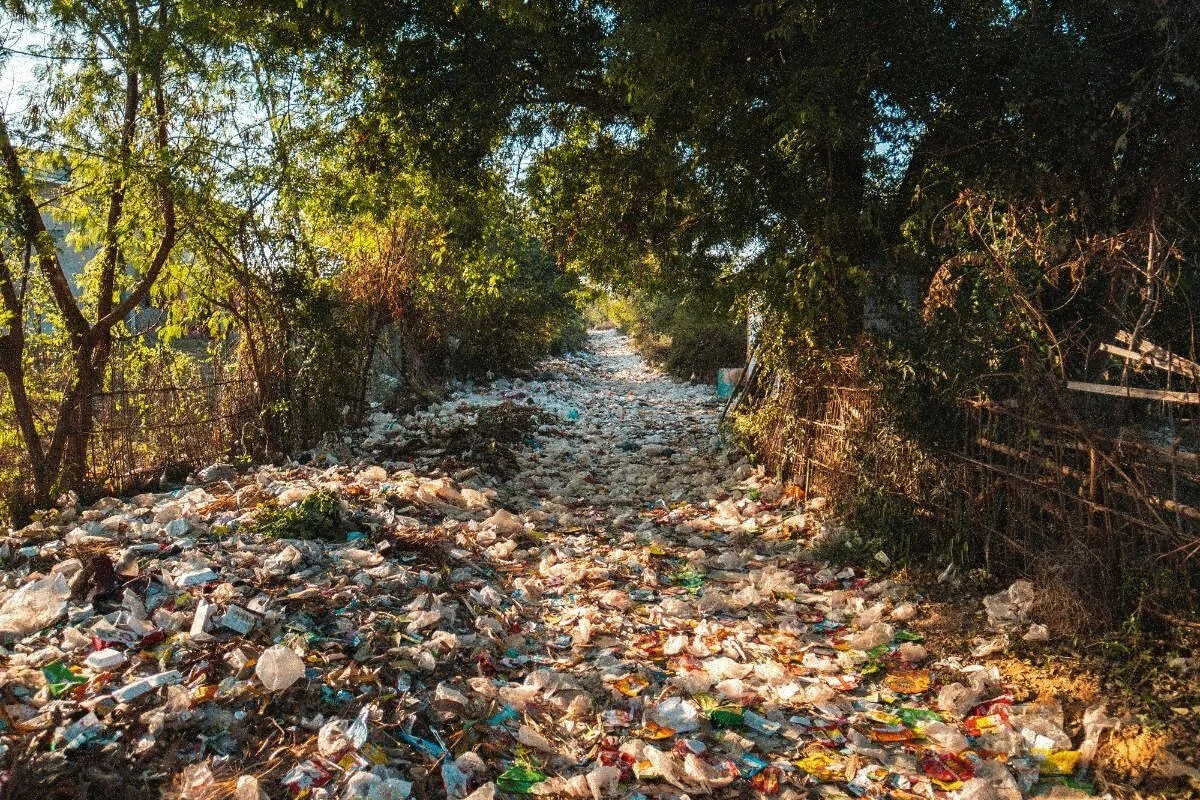
Microplastics accumulate in marine and terrestrial ecosystems, harming biodiversity and food webs:
Marine species ingest microplastics, leading to malnutrition, reduced fertility, and toxic accumulation (2)
Agricultural soils become contaminated through plastic mulching, biosolids, and atmospheric fallout, and are now major reservoirs of microplastics (18)
Microplastics affect soil structure and microbial communities, undermining agricultural productivity and ecosystem resilience (18)
Ultimately, ecosystem degradation loops back to human health, through food security, water quality, and exposure.
Microplastics at Work
Microplastic exposure is not just a public health or environmental issue, it’s also a significant, emerging occupational health challenge. High risk industries include:
Textile and garment manufacturing: workers exposed to airborne synthetic fibres
Construction and demolition: release of microplastics from insulation, paints, and sealants
Plastic production and recycling: exposure to microplastic dust and chemical additives
Waste management and wastewater treatment: high volumes of airborne and waterborne microplastics.
Workers in these sectors may face increased risks of respiratory and systemic exposure, often without tailored risk controls. Yet regulatory frameworks are still catching up - microplastics are not yet included in most occupational exposure standards.
Addressing the Risk: A Systems Issue
Microplastics highlight the interdependence between environmental degradation and public and occupational health. They are a tangible example of how environmental exposures flow through ecological, occupational and societal systems, ultimately impacting people in a variety of situations (1,2).
Addressing this issue requires cross sector action:
Global collaboration is essential to reduce plastic production and improve circular economy models. Ongoing negotiations for a Global Plastics Treaty through United Nations Environment Programme aims to curb plastic pollution at its source
Governments must recognise and control microplastic exposures, and enact stronger regulation and monitoring
Employers must recognise and control microplastic exposures. Controls may include improving air filtration and ventilation in high-exposure workplaces; using enclosed systems during plastic processing and recycling; and enhancing PPE guidance tailored for microplastic dust
Researchers and industry must identify and establish ways to effectively measure, monitor, and remove microplastic pollution
Individuals and communities must be empowered with knowledge and protection. They also need to systematically decrease their reliance on products containing plastic (5).
Key Takeaway
Microplastics are no longer an invisible threat. They are measurable, widespread, and increasingly linked to human health impacts, including at home, and at work. Recognising microplastics as a hazard, and embedding solutions within broader occupational, environmental and public health frameworks, is a critical step toward protecting both people and the planet.
References
World Health Organization (2022) – Dietary and inhalation exposure to nano- and microplastic particles and potential implications for human health. Geneva: WHO.
United Nations (2021) – From Pollution to Solution: A global assessment of marine litter and plastic pollution. Nairobi: UNEP
European Food Safety Authority (EFSA) Panel on Contaminants in the Food Chain. (2016). Presence of microplastics and nanoplastics in food, with particular focus on seafood. EFSA Journal, 14(6), 4501.
International Labour Organization 2023 Hazardous exposures to plastics in the world of work. Geneva: ILO. https://www.ilo.org/publications/hazardous-exposures-plastics-world-work
Thompson, R.C.; Courtene-Jones, W.; Boucher, J.; Pahl, S.; Raubenheimer, K.; Koelmans, A.A. Twenty years of microplastic pollution research-what have we learned? Science 2024, 386, eadl2746
Bank, M. S., Mitrano, D. M., Rillig, M. C., Sze Ki Lin, C., & Ok, Y. S. (2022). Embrace complexity to understand microplastic pollution. Nature reviews. Earth & environment, 3(11), 736-737.
Wang, F., Wong, C. S., Chen, D., Lu, X., Wang, F., & Zeng, E. Y. (2018). Interaction of toxic chemicals with microplastics: A critical review. Water research (Oxford), 139, 208-219.
Borgatta, M., & Breider, F. (2024). Inhalation of Microplastics - A Toxicological Complexity. Toxics (Basel), 12(5), 358.
Vethaak, A. D., & Legler, J. (2021). Microplastics and human health. Science (American Association for the Advancement of Science), 371(6530), 672-674.
Cox, K. D., Covernton, G. A., Davies, H. L., Dower, J. F., Juanes, F., & Dudas, S. E. (2019). Human Consumption of Microplastics. Environmental science & technology, 53(12), 7068-7074.
Han, J. H., & Kim, H. S. (2025). Microplastics in Cosmetics: Emerging Risks for Skin Health and the Environment. Cosmetics (Basel), 12(4), 171.
Ragusa, A., Svelato, A., Santacroce, C., Catalano, P., Notarstefano, V., Carnevali, O., Papa, F., Rongioletti, M. C. A., Baiocco, F., Draghi, S., D'Amore, E., Rinaldo, D., Matta, M., & Giorgini, E. (2021). Plasticenta: First evidence of microplastics in human placenta. Environment international, 146, 106274.
Schwabl, P., Köppel, S., Königshofer, P., Bucsics, T., Trauner, M., Reiberger, T., & Liebmann, B. (2019). Detection of Various Microplastics in Human Stool: A Prospective Case Series. Annals of internal medicine, 171(7), 453-457.
Li, J., Zhang, K., & Zhang, H. (2018). Adsorption of antibiotics on microplastics. Environmental pollution (1987), 237, 460-467.
Lehner, R., Weder, C., Petri-Fink, A., & Rothen-Rutishauser, B. (2019). Emergence of Nanoplastic in the Environment and Possible Impact on Human Health. Environmental science & technology, 53(4), 1748-1765.
Sun, A., & Wang, W.-X. (2023). Human Exposure to Microplastics and Its Associated Health Risks. Environment & health (Washington, D.C.), 1(3), 139-149.
Li, C., Li, X., Bank, M. S., Dong, T., Fang, J. K.-H., Leusch, F. D. L., Rillig, M. C., Wang, J., Wang, L., Xia, Y., Xu, E. G., Yang, Y., Zhang, C., Zhu, D., Liu, J., & Jin, L. (2024). The “Microplastome” - A Holistic Perspective to Capture the Real-World Ecology of Microplastics. Environmental science & technology, 58(9), 4060-4069.
Souza Machado, A. A., Kloas, W., Zarfl, C., Hempel, S., & Rillig, M. C. (2018). Microplastics as an emerging threat to terrestrial ecosystems. Global change biology, 24(4), 1405-1416.